Logan Coleman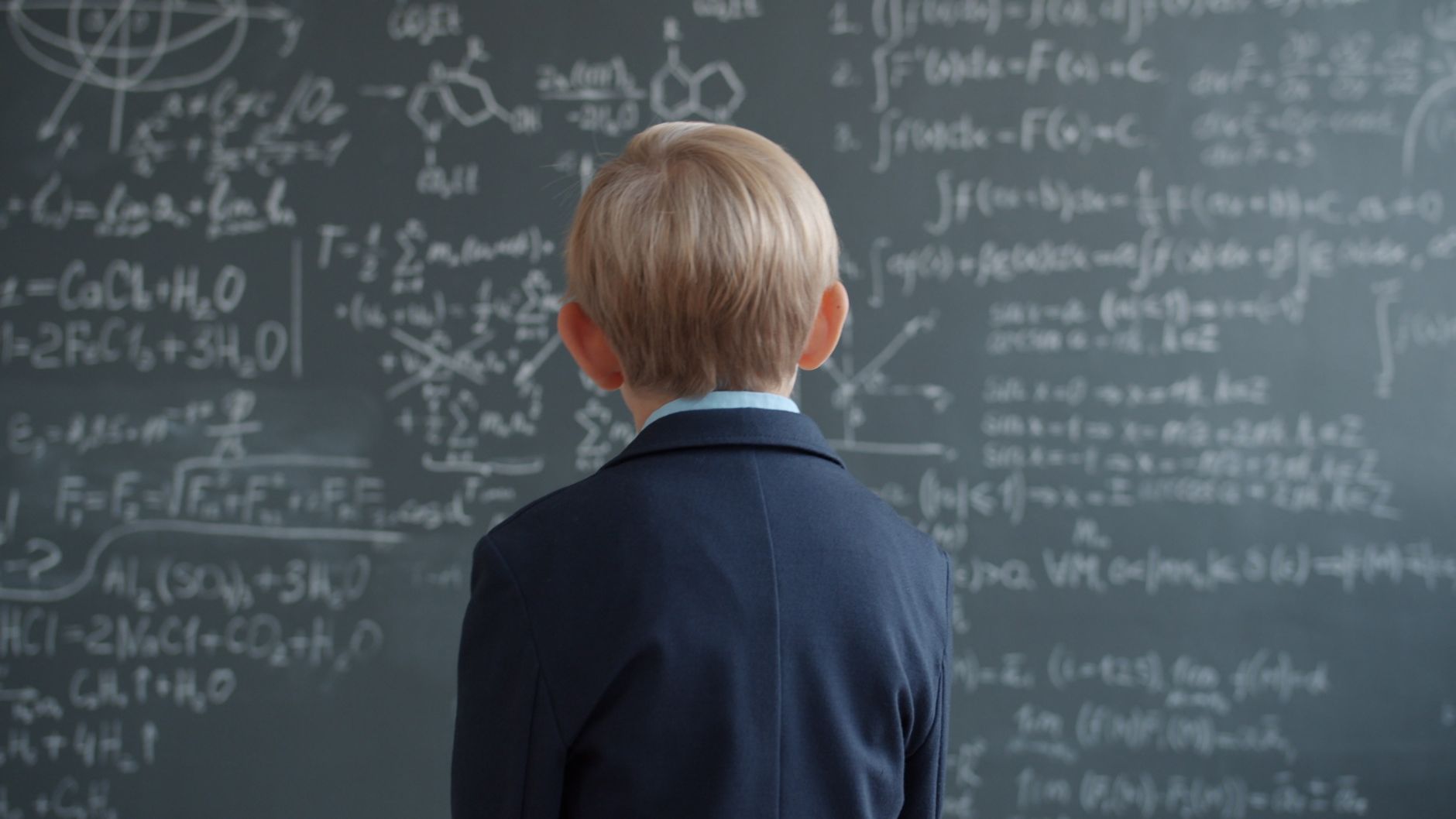
math’s hardest problems have been addressed by AI, yet humanity learned nothing significant from this achievement. The implications of this solution raise questions about our understanding and application of complex mathematical concepts.
What Are Math’s Hardest Problems?
Math’s hardest problems have long captivated mathematicians and scientists alike, challenging the limits of human understanding. These problems encompass a range of complex topics, each presenting unique difficulties that have yet to be resolved. Notable examples include:
- The Riemann Hypothesis: A conjecture about the distribution of prime numbers that remains unproven.
- P vs NP Problem: A fundamental question in computer science regarding the efficiency of solving versus verifying problems.
- Yang-Mills Existence and Mass Gap: A theoretical challenge in physics related to quantum field theory.
- Navier-Stokes Existence and Smoothness: A problem concerning fluid dynamics that has yet to be fully understood.
Despite advancements, including AI solving some of these challenges, the lessons drawn from these attempts often seem limited, leaving humanity to ponder the implications of progress in tackling math’s hardest problems.
The Role of AI in Solving Math
The integration of artificial intelligence into mathematics has sparked both excitement and concern regarding math’s hardest problems. AI’s capability to analyze vast amounts of data and identify patterns has led to breakthroughs in areas previously thought insurmountable.
However, the implications of these advancements raise critical questions about the nature of learning in mathematics. While AI can provide solutions, it often lacks the ability to convey the underlying principles and reasoning that are essential for deeper understanding.
This has resulted in a paradox: humanity may achieve solutions to math’s hardest problems, yet there is a risk of stagnation in educational growth and problem-solving skills. The lessons learned from AI’s interventions may not translate effectively into human understanding, leading to a reliance on technology rather than fostering critical thinking.
As we navigate this evolving landscape, it is crucial to balance AI’s capabilities with the need for educational integrity in mathematics.
Humanity’s Response to AI Solutions
As AI continues to tackle math’s hardest problems, the response from humanity has been mixed. While some celebrate the advancements in technology, others express concern over the implications of relying on AI for solutions. The rapid progress raises questions about our understanding of mathematics and the value of human intuition.
Many believe that the lessons learned from AI’s solutions are not being fully embraced. Instead of fostering a deeper appreciation for mathematical concepts, there is a risk that society may become overly dependent on technology.
- Complacency: Some individuals may feel that AI has solved the problem, diminishing the incentive to explore further.
- Understanding: There is concern that the complexity of the solutions might not be accessible to the average learner.
- Innovation: Relying solely on AI could stifle creative problem-solving approaches in mathematics.
In this evolving landscape, humanity’s response to AI solutions remains critical for the future of mathematical inquiry.
Lessons Learned from AI Breakthroughs
As artificial intelligence continues to tackle math’s hardest problems, several lessons emerge from these breakthroughs. The initial excitement surrounding AI’s ability to solve complex equations often overshadows the crucial reflections needed for future advancements.
Among the key lessons learned are:
- Collaboration is essential: AI’s success highlights the importance of interdisciplinary approaches, combining insights from mathematicians and computer scientists.
- Caution in reliance: Over-dependence on AI could stifle human creativity and critical thinking in mathematical exploration.
- Ethical considerations: The implications of AI solutions should be examined, ensuring they benefit society as a whole.
Ultimately, while AI has made strides in addressing math’s hardest problems, it is crucial for humanity to extract meaningful lessons to ensure sustainable progress in both mathematics and technology.
The Future of Mathematics and AI
The intersection of mathematics and artificial intelligence is evolving rapidly, raising questions about the future of mathematics and AI’s role in it. As technology advances, the potential for AI to tackle math’s hardest problems becomes increasingly plausible. However, the lessons learned from AI’s breakthroughs reveal a concerning trend.
Despite remarkable advancements, such as algorithms that can solve complex equations, many experts argue that the human understanding of these solutions remains superficial. The reliance on AI may hinder deeper comprehension and creativity in mathematical thinking.
Furthermore, this reliance could lead to a disconnect between mathematicians and the tools they use. It is essential to foster a balance where AI serves as an aid rather than a crutch, ensuring that the study of mathematics continues to thrive alongside technological innovations.
- Balancing technology and human insight
- Cultivating creativity in problem-solving
- Ensuring a deep understanding of solutions
Challenges in Understanding Complex Solutions
The emergence of AI solutions for math’s hardest problems has brought to light several challenges in understanding complex solutions. While these breakthroughs demonstrate the potential of artificial intelligence, they also highlight the limitations of human comprehension. Many mathematicians are grappling with the implications of these solutions, as they can often be overwhelmingly intricate.
Some key challenges include:
- Interpretation of Results: The solutions generated by AI may be correct, yet their proofs can be convoluted, leading to confusion among experts.
- Dependency on Technology: Relying on AI could deter mathematicians from developing their problem-solving skills, creating a knowledge gap.
- Accessibility of Knowledge: As AI continues to advance, the complexity of solutions could alienate budding mathematicians.
These factors underscore the need for a more collaborative approach between human intellect and AI capabilities in tackling math’s hardest problems.
Implications for Education and Learning
The implications of AI’s solutions to math’s hardest problems extend far beyond academic achievements, raising significant questions for education and learning methodologies. As these advanced algorithms tackle complex equations with unprecedented efficiency, educators must adapt their teaching strategies to ensure students grasp fundamental concepts rather than rely solely on technology.
Some key considerations include:
- Curriculum Development: Integrating AI tools into the classroom can enhance learning but should not replace traditional problem-solving skills.
- Critical Thinking: Students must be encouraged to engage with math’s hardest problems, fostering a deeper understanding rather than surface-level solutions.
- Ethical Use of AI: Educators should discuss the implications of AI in mathematics, promoting awareness of its limitations and potential biases.
Ultimately, the intersection of AI and education presents both challenges and opportunities in reshaping how we approach mathematics in the 21st century.
Public Perception of AI in Science
The public perception of AI in science, particularly concerning math’s hardest problems, is a complex landscape shaped by both excitement and skepticism. Many view AI as a revolutionary tool that can unlock solutions to longstanding mathematical challenges, while others express concerns about the implications of these advancements.
In various surveys, respondents have highlighted the following key sentiments:
- Optimism: A significant portion of the public believes AI can enhance human understanding of complex problems.
- Skepticism: Many worry that reliance on AI solutions detracts from traditional learning and problem-solving skills.
- Confusion: The intricacies of AI-generated answers often leave people feeling disconnected from the underlying mathematics.
As society grapples with these mixed feelings, it becomes clear that the journey to truly comprehend math’s hardest problems involves not just technological advancements, but also a deeper engagement with the educational process.
Photo by Vitaly Gariev on Pexels
Where this came from
You might also like
India wins gold: Is this the best moment for cricket? · Kidney Disease Mutation: Proven Cellular Effects Uncovered · Nanoparticle drug-delivery: Proven method may improve endometriosis treatment